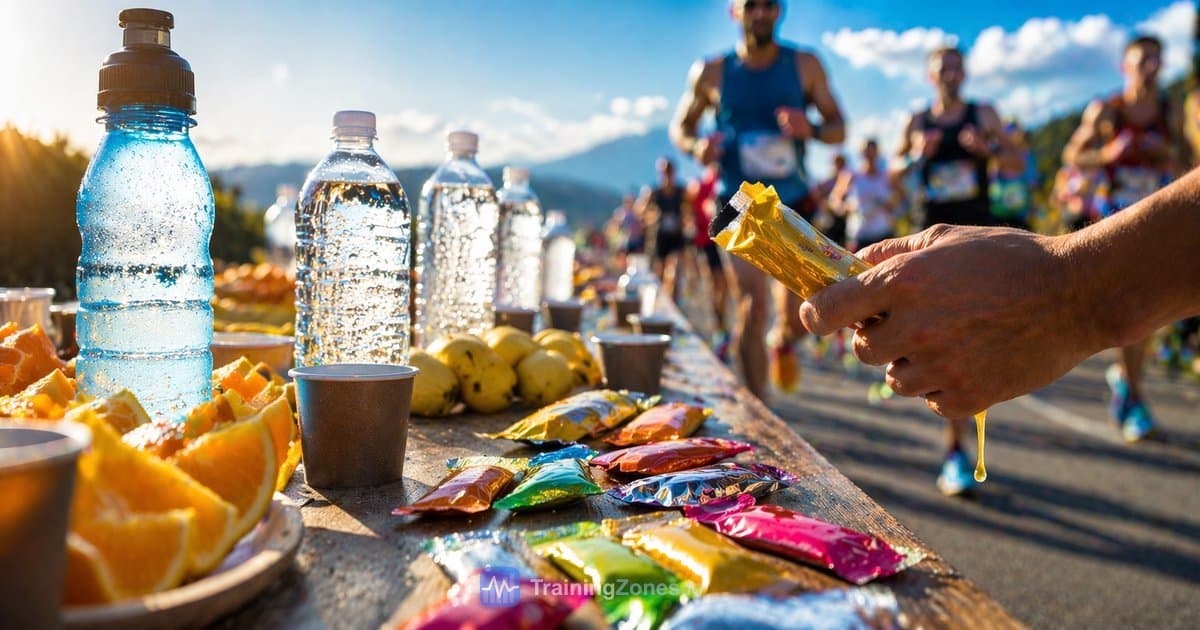
How Many Carbs Per Hour Do You Need for Endurance Exercise?
Endurance athletes need 30 to 120 grams of carbohydrates per hour during exercise, depending on duration and intensity. For events lasting 1 to 2.5 hours, aim for 30–60 g/h using glucose-based carbs. For events beyond 2.5 hours, target 60–90 g/h with a glucose-fructose blend. Elite athletes in ultra-endurance events now push up to 120 g/h using dual-transport formulas.
Getting your carbs per hour dialed in is honestly one of the biggest performance levers you have in endurance sport. Too few and you bonk, that awful wall where your legs just stop cooperating. Too many and your stomach rebels, which can wreck an entire race. The sweet spot depends on your event, your gut, and how much you've practiced fueling under stress.
Here's the quick breakdown:
- Under 45 minutes : water only, no carbs needed
- 45–75 minutes : mouth rinse or up to 30 g/h
- 1–2.5 hours : 30–60 g/h (single transporter)
- 2.5–3 hours : 60–90 g/h (dual transport recommended)
- 3+ hours : 80–120 g/h (dual transport essential)
Why Do Endurance Athletes Need Carbohydrates During Exercise?
Carbohydrates are the primary fuel source during moderate-to-high intensity exercise. Your body stores carbs as glycogen in muscles and liver, but those stores are limited, roughly 400–500 grams total, which gives you about 1,600–2,000 calories of available energy.
During endurance exercise at moderate intensity (Zone 2–3), your body burns a mix of fat and carbohydrates. As intensity climbs above the lactate threshold (Zone 4–5), carbs become the dominant fuel. The problem? Glycogen stores typically last only 60 to 90 minutes of sustained hard effort.
When glycogen runs out, things go south fast:
- Muscle glycogen depletion : your legs feel like concrete blocks
- Liver glycogen depletion : blood sugar drops, causing dizziness and confusion
- The bonk : a sudden, dramatic energy crash that forces you to walk or stop entirely
- Cognitive decline : poor decision-making, which is genuinely dangerous in cycling or triathlon
This is why fueling during exercise is critical for any session over 60–75 minutes. The carbs you consume get absorbed into the bloodstream and delivered directly to working muscles, sparing your glycogen reserves and pushing back the point of fatigue.
Use our Heart Rate Zone Calculator to find your personal zones and understand how intensity affects your fuel needs.
What Is the Glucose-Fructose Dual Transport Model?
The glucose-fructose dual transport model is the most important concept in modern sports nutrition. Your intestine absorbs glucose through one transporter (SGLT1), which maxes out at about 60 grams per hour. For decades, that was considered the absolute ceiling.
According to Jeukendrup (2004), adding fructose, which uses a completely different transporter (GLUT5), allows athletes to absorb significantly more total carbohydrate. When glucose and fructose are combined at a ratio of roughly 1:0.8, total absorption can reach 90–120 grams per hour.
How the two transporters work:
- SGLT1 transporter : absorbs glucose and maltodextrin; capacity maxes out at ~60 g/h
- GLUT5 transporter : absorbs fructose only; adds an extra 30–60 g/h of absorption capacity
- Combined : both transporters working simultaneously allow 90–120 g/h total
- Optimal ratio : research points to approximately 1:0.8 glucose-to-fructose
This discovery changed everything. Before dual-transport research, athletes were capped at 60 g/h no matter how much they consumed, the excess just sat in the gut, causing bloating and nausea. Now, with the right carb mix, you can nearly double your fueling rate. At TrainingZones.io, we help endurance athletes match their fueling to their actual intensity using our free heart rate zone and power zone calculators.
If you're consuming more than 60 g/h, you must use a glucose-fructose blend. Pure glucose alone won't be absorbed fast enough, and the excess will cause gastrointestinal distress.
How Much Should You Take Based on Exercise Duration?
The amount of carbs per hour you need depends primarily on how long your event lasts. Short events need minimal fueling; ultra-endurance events demand an aggressive carbohydrate strategy that you've rehearsed many times.
Carb Intake Calculator
Slide to see the recommended carbohydrate intake for your exercise duration.
Ratio 1:0.8 — two intestinal transporters maximize absorption
The duration-based breakdown:
- Under 45 minutes : No carbs needed. Your glycogen stores handle it. Just drink water if you're thirsty.
- 45–75 minutes : A carb mouth rinse or small sips of sports drink (up to 30 g/h) can boost performance. Your brain senses carbs in the mouth and reduces percieved effort : even before absorption happens.
- 1–2 hours : Aim for 30–60 g/h. One gel every 30–45 minutes plus sips of sports drink usually does the job. Single-transporter carbs (glucose/maltodextrin) work fine at this level.
- 2–3 hours : Target 60–90 g/h. This is where dual-transport formulas become essential. You need a glucose-fructose blend to absorb this amount without GI issues.
- 3+ hours (Ironman, ultra) : Target 80–120 g/h. Aggressive fueling with dual-transport products is non-negotiable. Practice extensively in training first.
Research by Stellingwerff and Cox (2014) confirmed that higher carbohydrate intake correlates with better performance in events over 2 hours, but only when the gut is trained to handle it.
What Are the Best Carb Sources During Exercise?
The best carbohydrate sources during exercise are those that absorb rapidly, go down easily at race pace, and sit well in your stomach. Not all carbs are equal when you're running at threshold or grinding up a climb.
Fast-absorbing liquid and semi-liquid sources:
- Energy gels : 20–45 g per gel, portable, fast absorption; take with water
- Sports drinks : 30–60 g per bottle (500 ml), deliver fluids and carbs simultaneously
- Carb drink mixes : concentrated powders (maltodextrin-fructose), up to 80–90 g per bottle
Solid and semi-solid sources:
- Energy bars : 30–50 g per bar, better tolerated at lower intensities (cycling, hiking)
- Energy chews / gummies : 20–30 g per serving, easy to dose
- Real food : rice cakes, bananas, dates, boiled potatoes; popular in cycling and ultra-running
The intensity factor matters. At high intensity (marathon pace, time trial), liquid sources are preferred because they clear the stomach faster. At lower intensity (long bike rides, ultras), solid foods are well tolerated and provide variety, which helps prevent the "everything tastes disgusting" phase that hits many athletes late in long events.
Cycling Nutrition: How to Fuel On the Bike
Cycling nutrition is arguably the easiest endurance sport to fuel because you can carry more, access pockets easily, and your stomach tolerates food better in the saddle than while running. That makes cycling the perfect time to front-load your calories in multi-sport events.
For rides over 90 minutes, aim for at least 60 g/h. For long sportives or stage races, push toward 80–90 g/h using dual-transport products. Here's what works for most cyclists:
- Two bottles per hour : one with concentrated carb mix (40–60 g), one with electrolytes
- One gel every 30 minutes : on top of the bottles, especially on climbs where you burn more
- Solid food in the first 2 hours : rice cakes, bars, or bananas while intensity is moderate
- Switch to liquids and gels in the final hours as intensity increases
Our pick: The Maurten Gel 100 is a great option for cyclists targeting 90+ g/h, its hydrogel technology means fewer GI issues even at high intake rates.
Track your power output accurately with the TrainingZones.io FTP Calculator to match your fueling to your actual intensity.
Half Marathon and Marathon Nutrition Plan
For a half marathon, most runners need 30–60 grams of carbs per hour. A single gel plus water every 30–40 minutes is typically sufficient. The half marathon is short enough that you don't need dual-transport formulas, simple glucose gels work fine.
Marathon nutrition is a different beast. You're out there for 2.5 to 5+ hours, which means fueling becomes a make-or-break factor. Target 60–90 g/h using dual-transport gels or concentrated drink mixes.
A practical marathon fueling plan:
- Start fueling at 20–30 minutes : don't wait until you're hungry
- Take one gel every 20–25 minutes (or equivalent from sports drink)
- Practice your exact race nutrition in at least 3 long runs before the event
- Carry your own gels : don't rely solely on what's offered at aid stations
- Reduce solid food after halfway : your stomach tolerance drops as fatigue increases
The classic mistake? Waiting too long to start fueling, then cramming gels in the second half and wondering why your stomach explodes at mile 20.
Triathlon Nutrition: Fueling Across Three Sports
Triathlon nutrition is unique because you need to fuel across three different sports with different demands. The swim is mostly glycogen-powered (you can't eat while swimming), which means the bike leg is where you catch up on calories.
For Olympic distance triathlon (2–3 hours total), aim for 60–80 g/h on the bike and 40–60 g/h on the run. For Ironman, the numbers jump to 80–100 g/h on the bike and 60–80 g/h on the run.
Key triathlon fueling principles:
- Front-load on the bike : this is your easiest fueling window; use it aggressively
- Practice T2 nutrition : know exactly what you'll eat in the first 10 minutes of the run
- Reduce solid food before the run : switch to gels and liquids 30 minutes before T2
- Account for heat : hot races require more fluid and potentially less solid food
- Test everything in brick sessions : your gut after 4 hours on the bike behaves very differently than fresh
Plan your entire race day nutrition alongside your season with our Triathlon Season Planning Guide.
How to Train Your Gut to Absorb More Carbohydrates
Gut training is the process of systematically increasing carbohydrate intake during training to improve intestinal absorption capacity. Research by Podlogar and Wallis (2022) showed that the gut is highly adaptable, regular exposure to high carb loads increases the number and activity of intestinal transporters.
Here's a practical gut training protocol:
- Week 1–2: Establish your baseline : Start with your current comfortable intake (usually 30–40 g/h) during long training sessions
- Week 3–4: Increase by 10 g/h : Add one extra gel or 200 ml of sports drink per hour and monitor for bloating, cramps, or nausea
- Week 5–6: Increase again by 10 g/h : Continue the gradual ramp; switch to dual-transport products (glucose + fructose) if exceeding 60 g/h
- Week 7–8: Full race simulation : Practice your complete race fueling plan during a long session at race intensity
- Ongoing: Maintain your gains : Keep practicing at your target intake during at least one long session per week before your event
The TrainingZones.io team recommends starting gut training at least 8 weeks before your target event. Here are the rules that matter:
- Never test a new fueling strategy on race day : always in training first
- Increase gradually : jumping from 40 g/h to 90 g/h overnight is asking for trouble
- Practice at race intensity : your gut at easy pace is not the same gut at threshold
- Stay hydrated : carb absorption requires adequate fluid; dehydration makes GI symptoms worse
- Track what works : note what you ate, when, and how your stomach responded
What Happens If You Take Too Many or Too Few Carbs?
Getting your carb intake wrong in either direction has real consequences, but the symptoms and fixes are very different.
Under-fueling (too few carbs):
- Glycogen depletion after 60–90 minutes of hard effort
- The bonk : sudden, severe energy loss that feels like hitting a brick wall
- Blood sugar crash : dizziness, confusion, shaky hands
- Pace collapse : often 20–30% slower in the second half of a race
- Injury risk : fatigued muscles are more vulnerable to strains
Over-fueling (too many carbs):
- Bloating and stomach cramps : excess carbs sit unabsorbed in the gut
- Nausea and vomiting : your body rejects what it can't process
- Osmotic diarrhea : unabsorbed carbs pull water into the intestine
- Performance drop : GI distress forces you to slow down or stop entirely
- Much worse with glucose only : exceeding 60 g/h without fructose almost guarantees problems
The sweet spot is finding the highest intake your gut tolerates without symptoms, then maintaining it consistently. For most recreational athletes, 40–60 g/h is a realistic starting point. Competitive athletes who train their gut typically handle 60–90 g/h, and elites push 90–120 g/h.
Plan your strategy with precision using our Race Nutrition Calculator.
How Do Elite Athletes Fuel During Competition?
Elite endurance athletes now consume dramatically more carbohydrates than what was recommended just a decade ago. The fueling revolution is real, and the numbers from professional sport are eye-opening.
Tour de France, Professional cycling:
- Riders consume 90–120 g/h during mountain stages lasting 4–6 hours
- Total daily carb intake can exceed 500 grams on a single stage
- Mix of gels, drinks, rice cakes, and bars : variety is key over hours in the saddle
Ironman triathlon:
- Top pros target 80–100 g/h across the 8–9 hour race
- Bike fueling is more aggressive (90+ g/h) since the gut tolerates more while cycling
- Run fueling drops to 60–80 g/h as GI tolerance decreases with running impact
Marathon, Sub-2:10 athletes:
- Elite marathoners target 60–90 g/h despite the difficulty of eating at 3:00/km pace
- The INEOS 1:59 Challenge (Kipchoge's sub-2 hour attempt) used a precise 100 g/h strategy
- Most use highly concentrated liquid formulas or gels grabbed at aid stations
Ultra-endurance (100+ miles):
- Intake ranges from 60–80 g/h due to lower relative intensity
- Greater variety: sandwiches, soup, real meals at aid stations
- The challenge shifts from absorption to appetite : athletes often stop wanting to eat after many hours
Best Energy Gels and Products for 90+ Grams Per Hour
Not all sports nutrition products are designed for high carbohydrate delivery. To consistently reach 90+ grams per hour, you need products specifically formulated with dual-transport carbohydrate blends, glucose or maltodextrin plus fructose.
Energy Gel Comparison
Compare popular energy gels and drinks for endurance sports
Used by Kipchoge & Tour de France teams
Most researched dual-transport gel
80g per bottle — one of the highest
45g in a single gel — very concentrated
90g per bottle — built for Ironman
Eco-friendly, popular in trail/ultra
Budget-friendly, no water needed
French brand, trail favorite
To reach 90+ g/h: combine a concentrated drink mix (60–80g per bottle) with 1–2 gels per hour (25–45g each). Set a timer every 15–20 minutes.
Tips for hitting 90+ g/h in practice:
- Combine formats : one concentrated bottle (60–80 g) per hour plus one gel (25–40 g)
- Set a timer : fuel every 15–20 minutes in small doses rather than large amounts at once
- Start within the first 20 minutes of your event : don't wait until you feel tired
- Always carry backup : extra gels in case you drop a bottle or miss an aid station
Our recommendation: For beginners, SiS Beta Fuel offers a well-researched, dual-transport formula at a reasonable price. For those chasing the highest performance, Maurten hydrogel technology minimizes GI distress at 90+ g/h intakes.
How to Build Your Personalized Race Fueling Plan
A personalized fueling plan separates a great race from a DNF. The guidelines above give you the framework, but your plan needs to fit your specific event, your body, and your gut tolerance.
- Determine your target carb intake : Estimate your race duration, use the duration-based guidelines above, and start at the lower end if your gut isn't trained yet
- Choose 2–3 tested products : Only use products you've tried and tolerated in training; calculate units per hour and total quantity plus 20% buffer
- Create a timing schedule : Divide your race into 15–20 minute fueling windows and assign specific products to each (e.g., gel at 0:15, drink at 0:30, gel at 0:45)
- Execute full dress rehearsals : Run your complete fueling plan during at least 2–3 long training sessions at race intensity before race day
- Adapt on race day : Stick to your plan in the first half; if nausea hits, switch to liquid-only calories temporarily; if energy drops, increase intake back toward your target
TrainingZones.io offers a complete suite of free tools to prepare your race day: build your nutrition strategy with our Race Nutrition Calculator, find your zones with the Heart Rate Zone Calculator, and plan your hydration with our Hydration and Electrolytes Guide.
Frequently Asked Questions About Carbs Per Hour in Endurance
How many carbs per hour should I consume while cycling?
Most cyclists need 60–90 grams of carbs per hour during rides lasting over 90 minutes. Use a glucose-fructose blend (dual-transport) if exceeding 60 g/h. For shorter rides under 90 minutes, 30–40 g/h or even just water is sufficient.
What should I eat during a marathon?
During a marathon, aim for 60–90 grams of carbs per hour from energy gels, sports drinks, or concentrated carb mixes. Start fueling at 20–30 minutes and take small amounts every 15–20 minutes. Practice your exact plan in training first, never try anything new on race day.
What should I eat during a half marathon?
For a half marathon, 30–60 grams of carbs per hour is typically enough. One energy gel plus water every 30–40 minutes works for most runners. Simple glucose gels are fine, you don't need dual-transport products for this duration.
What is the best energy gel for running?
The best energy gels for running provide 25–45g of carbs per serving with a glucose-fructose blend for maximum absorption. Maurten Gel 100, SiS Beta Fuel, and Neversecond C90 are top choices among competitive runners. The "best" gel is ultimately the one your stomach tolerates during high-intensity running.
Can you absorb more than 60 grams of carbs per hour?
Yes, by using a glucose-fructose blend that activates two different intestinal transporters (SGLT1 for glucose, GLUT5 for fructose). With dual-transport products at a roughly 1:0.8 ratio, athletes can absorb 90–120 g/h. This requires gut training over several weeks to tolerate.
Do I need to train my gut for race fueling?
Absolutely. Gut training, progressively increasing carb intake during training sessions, improves intestinal absorption capacity and reduces GI distress on race day (Podlogar & Wallis, 2022). Start 8–10 weeks before your event and increase intake by 10 g/h every two weeks.
References
- Jeukendrup AE (2004). Carbohydrate intake during exercise and performance. Nutrition, 20(7-8):669-677.
- Jeukendrup AE, Jentjens R (2000). Oxidation of carbohydrate feedings during prolonged exercise. Sports Med, 29(6):407-424.
- Podlogar T, Wallis GA (2022). New Horizons in Carbohydrate Research and Application for Endurance Athletes. Sports Med, 52(Suppl 1):5-23.
- Stellingwerff T, Cox GR (2014). Systematic review: Carbohydrate supplementation on exercise performance or capacity of varying durations. Appl Physiol Nutr Metab, 39(9):998-1011.