What Are Electrolytes and Why Do Endurance Athletes Need Them?
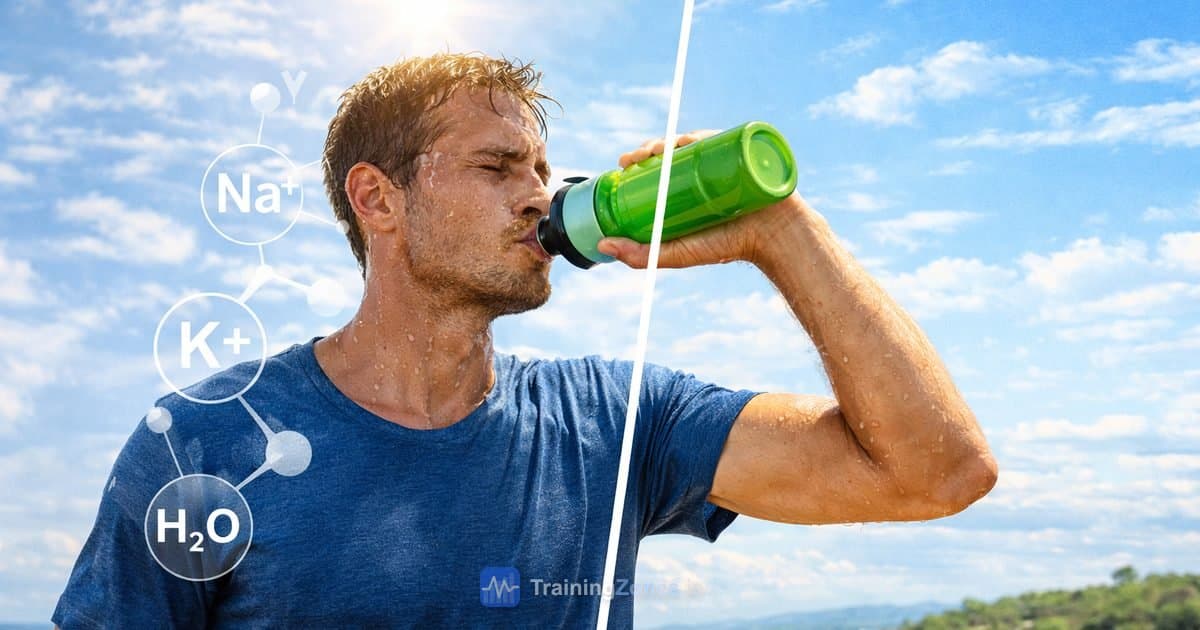
Electrolytes are minerals that carry an electrical charge in your body, including sodium, potassium, magnesium, and calcium. They regulate muscle contraction, nerve signaling, and fluid balance. For endurance athletes, electrolyte loss through sweat is one of the biggest threats to performance and safety.
During exercise, your body sweats to cool down. That sweat contains significant amounts of sodium (the primary electrolyte lost), along with smaller amounts of potassium, magnesium, and calcium. A typical athlete loses 900–1400 mg of sodium per liter of sweat, and sweat rates can reach 1–2.5 liters per hour during intense exercise in warm conditions.
Why electrolytes matter for performance:
- Sodium maintains blood volume and prevents hyponatremia (dangerously low blood sodium)
- Potassium supports muscle contraction and prevents cramping
- Magnesium is critical for energy metabolism and muscle relaxation
- Calcium enables muscle fiber activation and nerve impulse transmission
Without replacing these electrolytes during prolonged exercise, you risk muscle cramps, fatigue, dizziness, nausea, and in severe cases, life-threatening hyponatremia. At TrainingZones.io, we help you dial in both your hydration and electrolyte strategy based on science, not marketing.
How Much Water Should You Drink During a Marathon?
The optimal fluid intake during a marathon ranges from 400 to 800 ml per hour, depending on your sweat rate, body size, and weather conditions. The American College of Sports Medicine (ACSM, 2007) recommends drinking to prevent more than 2% body weight loss, while avoiding overdrinking.
The old advice of "drink as much as possible" has been replaced by a more individualized approach. Overdrinking is just as dangerous as underdrinking — it dilutes blood sodium levels and can cause exercise-associated hyponatremia (EAH), a condition that hospitalizes hundreds of marathon runners every year.
Practical hydration guidelines by duration:
- Under 60 minutes — water when thirsty, no specific schedule needed
- 1–2 hours — 400–600 ml/h of water or dilute sports drink
- 2–4 hours (marathon) — 500–800 ml/h with electrolytes (sodium 500–1000 mg/h)
- 4+ hours (ultra, Ironman) — 600–1000 ml/h with aggressive electrolyte replacement
The key principle is to drink to thirst as your primary guide, then adjust based on your known sweat rate. Lighter runners in cool weather need less; heavier athletes in heat need significantly more.
Calculate your personal zones to understand how intensity affects your sweat rate — use the free TrainingZones.io Heart Rate Zone Calculator to identify your training zones.
How to Calculate Your Sweat Rate for Optimal Hydration
Your sweat rate is the amount of fluid you lose per hour through perspiration. Knowing this number is the foundation of any personalized hydration strategy. The sweat test is simple: weigh yourself before and after exercise, account for fluids consumed, and divide by duration.
The sweat rate formula:
- Step 1 — Weigh yourself nude before exercise (in kg)
- Step 2 — Exercise for 60 minutes at your typical training intensity
- Step 3 — Track every milliliter of fluid you drink during the session
- Step 4 — Weigh yourself nude again immediately after
- Step 5 — Calculate: Sweat rate (ml/h) = (Weight before − Weight after) × 1000 + Fluid consumed
According to Sawka et al. (2007), average sweat rates for endurance athletes range from 0.5 to 2.0 liters per hour, but individual variation is enormous. Some athletes sweat as little as 400 ml/h in cool conditions; others exceed 2.5 L/h in the heat.
Factors that affect your sweat rate:
- Temperature and humidity — heat can double your sweat rate compared to cool weather
- Exercise intensity — higher heart rate zones produce more sweat
- Fitness level — trained athletes sweat earlier and more efficiently
- Body size — larger athletes generally produce more sweat
- Genetics — some people are simply "heavy sweaters" regardless of conditions
- Acclimatization — athletes adapted to heat sweat more but lose less sodium per liter
Repeat the sweat test in different conditions (cool vs. hot, easy vs. hard) to build a complete picture of your hydration needs across training scenarios.
What Is Hyponatremia and How Can Runners Avoid It?
Hyponatremia is a dangerous medical condition where blood sodium concentration drops below 135 mmol/L. Exercise-associated hyponatremia (EAH) occurs when athletes drink too much plain water during prolonged exercise, diluting their blood sodium to dangerous levels. It is the most common life-threatening medical condition at ultra-endurance events (Ironman, ultratrail), where athletes drink large volumes of plain water over many hours.
Symptoms of hyponatremia range from mild to severe:
- Mild — bloating, nausea, headache, confusion, weight gain during exercise
- Moderate — vomiting, altered mental status, wheezy breathing
- Severe — seizures, respiratory arrest, coma, death
According to Hew-Butler et al. (2015), hyponatremia is more common in slower runners, women, and those who drink on a fixed schedule rather than by thirst. The athletes at highest risk are those who overhydrate with plain water during events lasting over 4 hours.
How to prevent exercise-associated hyponatremia:
- Drink to thirst — do not force yourself to drink on a schedule
- Never drink more than you sweat — if you gain weight during exercise, you are overdrinking
- Use electrolytes — add sodium to your drinks (500–1000 mg/L) during events over 2 hours
- Know your sweat rate — this tells you your maximum safe intake
- Avoid NSAIDs — ibuprofen and aspirin impair kidney function and increase EAH risk
- Weigh yourself — if you weigh more after a race than before, you overdrank
The safest hydration strategy is simple: drink when thirsty, include sodium in your fluids, and never drink more fluid than you lose through sweat.
How Much Sodium, Potassium, and Magnesium Do You Need During Exercise?
Sodium is the primary electrolyte lost in sweat, at an average concentration of 900 mg per liter (range: 200–1800 mg/L). Potassium losses average 200 mg/L, and magnesium losses are approximately 15 mg/L. Your individual losses depend on genetics, fitness, acclimatization, and diet.
Electrolyte replacement guidelines for endurance exercise:
- Sodium — 500–1000 mg per hour for most athletes. Heavy sweaters or salty sweaters (visible white residue on skin/clothing) may need 1000–1500 mg/h. This is the most critical electrolyte to replace.
- Potassium — 100–200 mg per hour. Usually adequately replaced through sports drinks and post-exercise food. Banana = ~420 mg potassium.
- Magnesium — 50–100 mg per hour. Hard to replace during exercise; focus on daily dietary intake (nuts, seeds, leafy greens). Consider supplementation if you experience persistent cramps.
- Calcium — typically not needed during exercise; replaced through normal diet.
How to tell if you are a "salty sweater":
- White streaks or crusty residue on your skin, hat, or clothing after exercise
- Sweat that stings your eyes more than others report
- Strong craving for salty foods after training
- History of muscle cramps despite adequate hydration
Our pick: Precision Fuel & Hydration PH 1500 delivers 1500 mg of sodium per serving — the highest concentration available. Ideal for heavy sweaters and hot-weather racing, with no sugar or calories to interfere with your carb strategy.
What Is the Best Electrolyte Drink for Endurance Sports?
The best electrolyte drink for endurance sports contains 500–1000 mg of sodium per liter, minimal sugar (if used alongside separate carb sources), and tastes palatable enough that you will actually drink it. The ideal product depends on whether you separate your hydration and fueling strategies.
Two main approaches to sports hydration:
- All-in-one drinks — combine carbohydrates (30–60 g/L) with electrolytes. Convenient but limit flexibility. Examples: standard Gatorade, Maurten Drink Mix.
- Separated strategy — use a high-sodium, low-calorie electrolyte drink for hydration and separate gels/food for fueling. Preferred by most competitive athletes. Examples: Precision Hydration, LMNT, SOS Hydration.
What to look for in an electrolyte drink:
- Sodium content — at least 500 mg per serving; more for heavy sweaters
- Osmolality — hypotonic or isotonic solutions (below 300 mOsm/L) are absorbed fastest
- Minimal artificial ingredients — your gut is already stressed during exercise
- Taste — you will avoid drinking what tastes bad, especially late in a race
- Tested for banned substances — look for Informed Sport certification if you compete
Common products ranked by sodium content per serving:
- Precision Fuel PH 1500 — 1500 mg sodium
- LMNT — 1000 mg sodium
- SOS Hydration — 330 mg sodium
- Nuun Sport — 300 mg sodium
- Gatorade — 160 mg sodium (too low for most endurance use)
Plan your complete race nutrition with the TrainingZones.io Race Nutrition Calculator to combine hydration and fueling into one strategy.
How to Hydrate Before, During, and After Exercise
Hydration is a 24-hour process, not just something you do during training. Pre-exercise hydration sets the foundation, intra-exercise hydration maintains performance, and post-exercise rehydration prepares you for the next session.
Before exercise (2–4 hours prior):
- Drink 5–7 ml per kg of body weight (350–500 ml for a 70 kg athlete)
- Include sodium in your pre-exercise drink (500 mg) to help retain fluid
- Check urine color — pale yellow indicates adequate hydration
- Stop drinking large volumes 30 minutes before start to avoid sloshing
During exercise:
- Start drinking within the first 15–20 minutes
- Aim for 400–800 ml/h based on your sweat rate
- Include electrolytes (sodium 500–1000 mg/h) for sessions over 60 minutes
- Drink small amounts frequently (150–200 ml every 15–20 minutes) rather than large gulps
- Adjust for conditions: increase intake in heat, decrease in cold
After exercise:
- Rehydrate with 1.5× the fluid lost (e.g., lost 1 kg = drink 1.5 L over 2–4 hours)
- Include sodium in your recovery drink to improve fluid retention
- Eat a meal with salt within 2 hours of finishing
- Monitor urine color — return to pale yellow before your next session
- Avoid alcohol for at least 2 hours — it impairs rehydration
A 2% loss in body weight from dehydration reduces endurance performance by 4–6%. But overdrinking is equally dangerous. The goal is to stay in the 1–2% body weight loss range during exercise.
Does Caffeine Affect Hydration During Exercise?
Caffeine does not cause dehydration during exercise. This is one of the most persistent myths in sports nutrition. According to Killer et al. (2014), moderate caffeine intake (3–6 mg per kg of body weight) has no significant diuretic effect during exercise because the increased blood flow to muscles overrides caffeine's mild diuretic properties.
What caffeine actually does during exercise:
- Reduces perceived effort — exercise feels easier at the same intensity
- Improves endurance — delays fatigue by 2–5% in events lasting over 60 minutes
- Enhances fat oxidation — spares glycogen stores in early exercise
- Increases alertness — critical in ultra-endurance events where cognitive decline is a factor
Caffeine and hydration best practices:
- Do not avoid caffeine before exercise — its performance benefits outweigh any minor fluid effects
- Optimal dose — 3–6 mg/kg taken 30–60 minutes before exercise (200–400 mg for most athletes)
- Timing matters — caffeine peaks in blood at 45–60 minutes after consumption
- Habitual users — may need the higher end of the dose range for ergogenic effects
- Late in long races — a caffeinated gel at the 2/3 mark can provide a significant mental and physical boost
Caffeinated gels and drinks are tools, not threats to hydration. Include them in your race plan for performance benefits without worrying about fluid loss.
How to Adapt Your Hydration Strategy in Extreme Heat or Cold
Extreme environmental conditions dramatically change your hydration needs. Heat can double your sweat rate; cold suppresses thirst and increases urinary losses. Both require deliberate adjustments to your baseline strategy.
Hot conditions (above 30°C / 86°F):
- Sweat rate increases by 50–100% compared to temperate conditions
- Begin pre-cooling: cold drinks, ice vests, cold towels before the start
- Increase fluid intake to 800–1200 ml/h (based on your heat-adapted sweat rate)
- Increase sodium to 1000–1500 mg/h — you lose more electrolytes in heat
- Pour water on your head, neck, and wrists at aid stations (external cooling)
- Heat acclimatization (10–14 days of training in heat) dramatically improves sweat efficiency
Cold conditions (below 10°C / 50°F):
- Thirst is suppressed by up to 40% in cold weather — you still lose fluid
- Cold-induced diuresis increases urinary fluid loss
- Sweat rate is lower but not zero — you still need to drink
- Aim for 400–600 ml/h even if you do not feel thirsty
- Warm fluids improve palatability and core temperature maintenance
- Wind chill accelerates respiratory water loss
High altitude (above 2000 m / 6500 ft):
- Respiratory water loss doubles due to low humidity and increased breathing rate
- Increase baseline fluid intake by 500 ml/day
- Altitude suppresses appetite and thirst — set reminders to drink
- Acclimatize for 3–5 days before hard training at altitude
Calculate your energy expenditure in different conditions — the TrainingZones.io TDEE Calculator helps you understand total daily needs including exercise.
Frequently Asked Questions About Hydration and Electrolytes
How much water should I drink per day as a runner?
Most runners need 2.5–3.5 liters of total fluid per day, including water from food. On training days, add the fluid lost during exercise (measured by your sweat rate test). The simplest check is urine color — aim for pale straw yellow throughout the day.
Can you drink too much water during a marathon?
Yes. Drinking more fluid than you lose through sweat can cause exercise-associated hyponatremia, a dangerous drop in blood sodium. Symptoms include nausea, confusion, and seizures. Always drink to thirst, never on a forced schedule, and include electrolytes in your fluids.
What are the signs of dehydration during exercise?
Early signs include increased thirst, dry mouth, darker urine, and elevated heart rate at the same pace. Advanced dehydration causes dizziness, headache, muscle cramps, nausea, and a significant drop in performance. A body weight loss greater than 2% during exercise indicates meaningful dehydration.
Are electrolyte tablets better than sports drinks?
Electrolyte tablets (like Nuun or SIS Hydro) offer high sodium with minimal calories, which is ideal if you separate hydration from fueling. Sports drinks combine carbs and electrolytes in one product. Neither is universally "better" — the choice depends on your overall nutrition strategy and event duration.
How do I know if I need more sodium during exercise?
Signs you need more sodium include visible salt residue on skin or clothing after exercise, persistent muscle cramps despite adequate hydration, strong cravings for salty food post-exercise, and feeling bloated during long efforts. If you experience these, increase sodium intake to 1000–1500 mg per hour.
Should I take electrolytes on rest days?
Most athletes get sufficient electrolytes from a balanced diet on rest days. However, if you train daily or in hot climates, adding 500–1000 mg of sodium to your daily fluid intake helps maintain baseline hydration. Focus on whole foods rich in potassium (bananas, potatoes) and magnesium (nuts, seeds, dark chocolate).
References
- Sawka MN et al. (2007). Exercise and Fluid Replacement. Medicine & Science in Sports & Exercise, 39(2):377-390.
- Hew-Butler T et al. (2015). Statement of the Third International Exercise-Associated Hyponatremia Consensus Development Conference. Clinical Journal of Sport Medicine, 25(4):303-320.
- Killer SC et al. (2014). No Evidence of Dehydration with Moderate Daily Coffee Intake. PLOS ONE, 9(1):e84154.