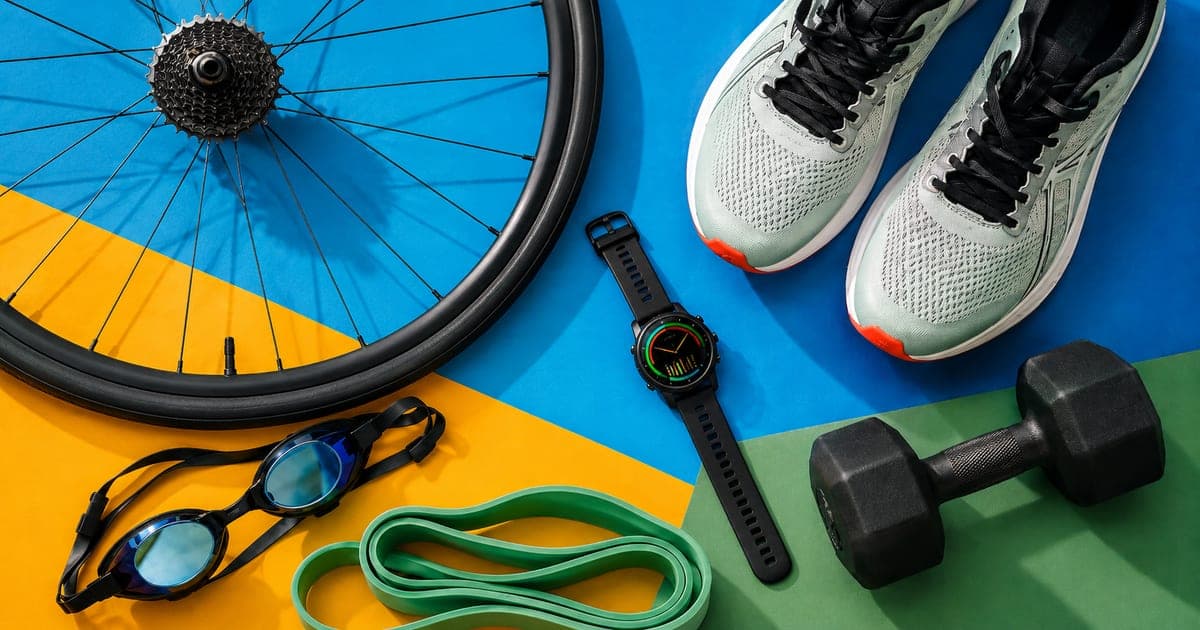
What Is Cross Training for Endurance Athletes?
Cross training for endurance athletes means regularly practicing a second, non-primary sport such as cycling, swimming, elliptical, or strength work to build aerobic capacity, correct muscular imbalances, and cut the injury risk that comes from repeating the same motion thousands of times. It supplements your main sport, it does not replace it.
Here is the honest version most articles skip. Cross training is not magic, and it is not a myth either. It sits in between. The research is clear that aerobic fitness transfers across endurance disciplines, so a hard hour on the bike genuinely feeds your running engine. What it cannot do is build the sport-specific mechanics that only your main sport develops. Hold both of those facts at once and you understand cross training better than most coaches explain it.
At TrainingZones.io we treat cross training as a tool with a job description: protect your ability to train, add aerobic volume your joints could not otherwise absorb, and fill the muscular gaps your main sport leaves behind. Used that way, it is one of the most reliable additions to an endurance program. Used as a shortcut to skip specific training, it quietly makes you slower.
Does Cross Training Actually Improve Performance?
Yes, cross training improves endurance performance, but through a side door rather than the front. Research shows it maintains or even raises VO2max during injury recovery (Bishop, 2009) and reduces overuse injuries when it makes up roughly 10 to 20% of weekly training volume. What it does not do is replace the neuromuscular adaptations that only your primary sport builds.
The mechanism is aerobic transfer. Your heart, lungs, mitochondria, and blood do not know whether you are pedaling or running. When you push a low-impact sport at the right intensity, you stimulate the same central adaptations: a stronger stroke volume, denser capillaries, more mitochondria. Tanaka's 1994 review on training transfer found that gains in aerobic power carry across disciplines at high rates, which is exactly why an injured runner who cycles hard often returns with their engine intact.
The catch is specificity. A runner who swaps every run for the bike keeps a runner-like VO2max but loses tendon stiffness, footstrike control, and the hip mechanics that only running miles build. So the smart framing is this: cross training defends and supplements your aerobic base, while sport-specific sessions turn that base into speed. The two are partners, not rivals.
Here is what that looks like in practice. Take a runner logging 40 km a week whose knees start complaining past 50 km. Instead of forcing more mileage, they add two easy 60-minute cycling sessions at Zone 2. Their weekly aerobic load climbs by the rough equivalent of 15 to 20 km of running, their VO2max keeps trending up, and their joints get a break from the impact that was holding them back. Six weeks later they are fitter and healthier without a single extra footstrike. That is cross training doing its actual job, and it is exactly how we think about it at TrainingZones.io.
Most of your cross training should sit at an easy aerobic effort, the same Zone 2 that anchors your endurance base. Our guide on Zone 2 training explains why this intensity drives the biggest adaptations for the least fatigue. To find your own range instead of guessing, run the numbers with our Heart Rate Zone Calculator and keep your easy cross training genuinely easy.
The Best Cross Training Activities for Runners
The best cross training activities for runners, ranked by how well they carry over to running, are aqua jogging, the elliptical, cycling, swimming, and strength work. The first four build aerobic fitness with little or no impact. Strength ranks lowest for aerobic transfer but highest for injury prevention, which is why it belongs in every plan.
Think of each activity as scoring on two axes: how much it feeds your running engine, and how much it protects you from breaking down. No single activity wins both. Aqua jogging almost perfectly copies your stride at zero impact, while strength barely touches your VO2max yet cuts injury risk roughly in half. The widget below lets you compare them directly.
Cross-Training Transfer Matrix
Tap an activity to see how much it carries over to running
Aqua jogging copies your running stride almost exactly with zero impact, so it is the gold standard for staying race-ready through an injury.
Here is how the main options stack up:
- Aqua jogging replicates the running gait almost exactly with zero joint impact, making it the top choice for staying race-ready through an injury.
- Elliptical mimics the running motion more closely than any other machine, giving a near-full aerobic carryover with barely any pounding.
- Cycling delivers large aerobic volume plus quad and glute strength at low impact, which is why it is the most popular cross training choice for runners.
- Swimming builds full-body aerobic fitness at zero impact and balances the upper body, though the transfer to run pace is slightly lower.
- Strength training does little for aerobic capacity but reduces sports injuries by around 50% (Lauersen et al., 2018) and sharpens running economy.
A simple rule from our coaches at TrainingZones.io: pick the activity that matches your reason for cross training. Injured or fragile joints point you to aqua jogging or the elliptical. Chasing extra aerobic hours points you to the bike. Building resilience and economy points you to the gym. Most runners benefit from rotating two of these across the week.
Cross Training for Cyclists: What Works?
For cyclists, the most useful cross training is running, strength work, and swimming, because they load the body in ways the bike never does. Cycling is low-impact and single-plane, so it leaves the posterior chain, bone density, and core underdeveloped. The right cross training fills exactly those gaps.
Running is the highest-value complement for most cyclists who can tolerate the impact. It loads bone, which cycling notoriously fails to do, and it recruits the hamstrings and glutes through a fuller range than pedaling. Start with short, easy runs on soft surfaces, because a strong cyclist often has the aerobic engine to run far before their joints are ready to. Progress the impact slowly.
Strength training is close behind. Heavy, low-rep work on squats, deadlifts, and single-leg movements raises maximal force output, which translates into a higher sustainable power at threshold and better durability late in long rides. Swimming rounds things out as a genuine active-recovery option: full-body, zero impact, and useful for opening up a chest and shoulders that spend hours hunched over the bars.
How much is enough? For most cyclists, one running session plus one or two strength sessions per week captures the benefit without denting bike-specific fitness. Keep the running short and easy at first, treat strength as quality rather than volume, and schedule both away from your hardest bike days, so the legs you need on the bike are fresh when it counts.
Whatever you add, anchor the intensity to your cycling zones so cross training complements rather than sabotages your key bike sessions. Set those zones precisely with our Power Zone Calculator, then keep easy days easy and let your bike-specific work carry the hard load.
Cross Training for Swimmers and Triathletes
For swimmers and triathletes, cross training is either a supplement to protect the shoulders or, in triathlon, built into the sport itself. Pure swimmers use dryland strength and cycling to balance a shoulder-dominant sport, while triathletes already cross train by definition, since each of their three disciplines shares aerobic fitness with the others.
For competitive swimmers, the shoulder is the weak link. Dryland strength that builds the rotator cuff, mid-back, and core reduces the overuse injuries that plague high-volume swimmers. Easy cycling adds aerobic volume without loading the arms, which is useful during heavy pool blocks when more swimming would only deepen fatigue.
Triathletes face a different truth. Their swim, bike, and run legs do share a central aerobic engine, so fitness built in one leg supports the others. But specificity still rules: an elite swimmer moving to triathlon cannot coast on swim fitness and expect to run fast off the bike. Each discipline needs its own specific training, and the brick sessions that link them are non-negotiable. Our guide on training intensity distribution explains how to spread easy and hard work across three sports without overcooking any of them.
For time-crunched triathletes, the trap is trying to train all three sports hard at the same time. A cleaner approach is to let the discipline you are furthest from race-ready in carry the specific, harder work, while the other two provide mostly easy aerobic support. That keeps the total load sane, protects recovery, and still gives every sport the specific stimulus it uniquely needs.
To keep your swim efforts honest and comparable week to week, anchor them to pace zones rather than feel. Our Swim Pace Zone Calculator turns a simple time trial into training zones you can actually hold yourself to.
How to Integrate Cross Training Into Your Schedule
To add cross training without wrecking your main sport, cap it at 10 to 20% of weekly volume, keep most of it at easy Zone 2 intensity, and slot it on recovery days or as a replacement for a session you cannot run. More than that, and it starts competing with the specific training that actually drives your results.
The 80/20 principle applies here too. Most of your total training week should stay easy, and cross training is a brilliant way to add easy aerobic volume without pounding your joints. Our guide on the 80/20 training rule covers why keeping the easy days truly easy is what lets the hard days land. Piling intense cross training on top of intense specific work is the fastest route to stagnation.
Here is a simple way to build it in:
- Anchor your key sessions first. Lock in the two or three sport-specific workouts that drive your goal, then build cross training around them, never over them.
- Fill recovery days with low-impact aerobic work. Replace a junk-mile easy run with 45 to 60 minutes of easy cycling or aqua jogging to add volume while your legs recover from impact.
- Add one strength session per week. Twenty to forty minutes of focused strength work is enough to unlock the injury-prevention benefit without stealing energy from your endurance work.
- Adjust by feel and data. If your key sessions start to suffer, cut cross training volume first. It is the supplement, not the meal.
Cross training only works if you can measure the intensity, because the whole point of easy days is that they stay easy. This is where a reliable heart rate device earns its place.
Our picks for tracking cross-training intensity: For all-round multisport tracking across the bike, pool, and road, the Garmin Forerunner 265 is a dependable one-watch solution. For the most accurate Zone 2 heart rate on land, a chest strap like the Polar H10 or the Garmin HRM 200 beats any wrist sensor. And for swimming or strength sessions where a chest strap is awkward, an optical armband like the Polar Verity Sense keeps your data clean.
Whatever device you use, confirm your easy range first. Plug your numbers into our Heart Rate Zone Calculator so your Zone 2 cross training is genuinely aerobic and not secretly a moderate-effort grind.
Common Cross Training Myths, Debunked
The biggest cross training myth is that it directly makes you a better runner, cyclist, or swimmer. It does not. It makes you a fitter, more durable athlete who can then train your main sport harder and more consistently. That distinction is the whole game, and getting it wrong quietly costs people their goals.
Let me walk through the myths that trip athletes up most often.
Myth: cross training can replace your main sport. Reality: it cannot. Cross training maintains your aerobic base and protects your joints, but it never builds the sport-specific mechanics that only your primary sport develops. Replace all your running with cycling and you will keep a decent VO2max while your running economy and injury resilience quietly erode.
Myth: more cross training is always better. Reality: past roughly 20% of your weekly volume, extra cross training starts to eat into the recovery and energy your key sessions need. More is not better, appropriate is better. Chasing volume everywhere is a classic route to burnout, which our guide on overtraining breaks down in detail.
Myth: strength training makes endurance athletes slow and bulky. Reality: heavy, low-rep strength work improves running economy and power output without meaningful mass gain in endurance athletes, and it cuts injury risk by around half. The bulky-lifter fear comes from bodybuilding, not from the two short strength sessions an endurance athlete actually needs.
Myth: if it feels hard, it must be working. Reality: most cross training should feel easy. The value of low-impact aerobic work comes from volume at a controlled intensity, not from turning every session into a suffer-fest. Turning your easy bike ride into a race defeats the entire purpose.
The correct mental model, and the one we push at TrainingZones.io, is simple: cross training protects and supports your ability to do sport-specific work. It is the scaffolding, not the building.
The Bottom Line on Cross Training
Cross training is neither a miracle nor a myth. It is a supplement that earns its place when you use it deliberately: 10 to 20% of your volume, mostly easy, aimed at the specific job of adding aerobic work, preventing injury, and balancing your body. Treat it as a replacement for specific training and it works against you. Treat it as support and it keeps you healthy enough to chase your real goals. At TrainingZones.io, we would always rather see you cross train with intent than pile on junk volume for its own sake.
Start by getting your intensity right, because a cross training session done at the wrong effort is just fatigue with no benefit. Set your easy range with our Heart Rate Zone Calculator, keep the easy days honest, and let cross training do its quiet, reliable work in the background.
Frequently Asked Questions About Cross Training
What is the best cross training for runners?
The best cross training for runners depends on your goal. For staying fit through injury, aqua jogging and the elliptical win because they copy the running motion at zero or low impact. For adding aerobic volume, cycling is the top pick, and for injury prevention, strength training is unmatched.
Is cycling good cross training for runners?
Yes, cycling is one of the best cross training options for runners. It builds aerobic fitness and quad strength at low impact, so you can add training volume without the joint stress of extra running. Aerobic gains from cycling transfer strongly to running, especially during injury recovery.
Is swimming good cross training for runners?
Swimming is excellent cross training for runners because it develops aerobic fitness with zero impact and balances the upper body. The transfer to running pace is slightly lower than cycling or the elliptical, but as a recovery-day and injury-proofing option it is hard to beat.
How often should runners cross train?
Most runners should cross train one to three times per week, keeping it to roughly 10 to 20% of total weekly training. Use it to replace easy or recovery runs and to add one strength session, rather than adding it on top of an already full running schedule.
Can cross training replace running?
Cross training can temporarily replace running during injury and maintain most of your aerobic fitness, but it cannot replace running long term. It does not build the tendon stiffness, footstrike control, and specific muscle recruitment that only running develops, so specificity always wins in the end.
Does cross training build endurance?
Yes, cross training builds endurance by developing the same central aerobic systems your main sport uses: a stronger heart, denser capillaries, and more mitochondria. Kept at an easy aerobic intensity, it adds meaningful endurance volume while sparing your joints the repetitive impact of your primary sport.
References
- Tanaka H (1994). Effects of cross-training. Transfer of training effects on VO2max between cycling, running and swimming. Sports Medicine, 18(5):330-339.
- Bishop D, Girard O, Mendez-Villanueva A (2009). Repeated-sprint ability part II: recommendations for training. Sports Medicine, 39(4):289-305.
- Lauersen JB, Andersen TE, Andersen LB (2018). Strength training as superior, dose-dependent and safe prevention of acute and overuse sports injuries. British Journal of Sports Medicine, 52(24):1557-1563.
- Mikkola J, Vesterinen V, Taipale R, Capostagno B, Hakkinen K, Nummela A (2011). Effect of resistance training regimens on treadmill running and neuromuscular performance in recreational endurance runners. Journal of Sports Sciences, 29(13):1359-1371.