What Is Heart Rate Variability?
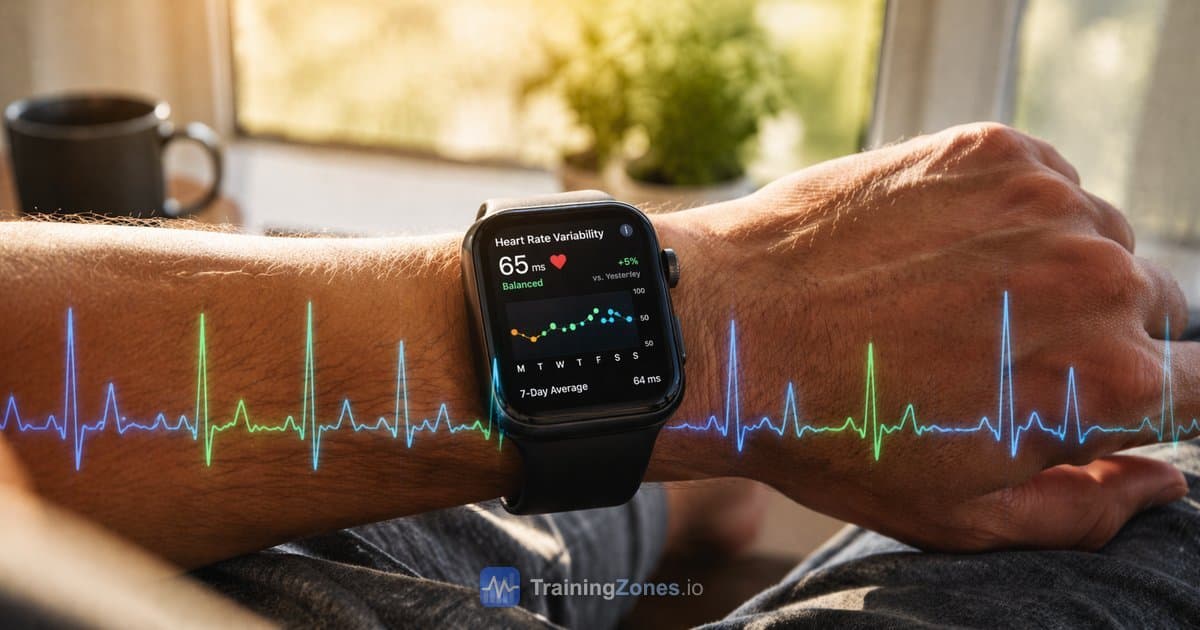
Heart rate variability (HRV) is the variation in time between consecutive heartbeats, measured in milliseconds. A healthy heart does not beat like a metronome — the intervals between beats constantly fluctuate. A resting heart rate of 60 bpm does not mean one beat every 1,000 ms. Instead, intervals might be 980 ms, 1,040 ms, 1,010 ms. This natural variation is HRV.
Higher HRV generally indicates a well-recovered, adaptable autonomic nervous system. Lower HRV signals that your body is under stress — whether from training load, poor sleep, illness, or psychological tension. According to Shaffer and Ginsberg (2017), HRV reflects the dynamic balance between the sympathetic ("fight or flight") and parasympathetic ("rest and digest") branches of the autonomic nervous system.
For endurance athletes, HRV has become one of the most powerful tools for monitoring recovery and guiding training decisions. Instead of guessing whether your body is ready for a hard session, HRV provides an objective daily data point that reflects your internal readiness. At TrainingZones.io, we help you track and interpret HRV alongside your training zones for smarter recovery decisions.
Normal HRV Values by Age and Gender: RMSSD Reference Table
Normal RMSSD values decrease progressively with age. According to the Lifelines Cohort Study (Tegegne et al., 2020, N=84,772), average RMSSD values by age group are:
| Age | Men (Mean) | Men (Median) | Women (Mean) | Women (Median) |
|---|---|---|---|---|
| 20-24 | 57.3 ms | 47.6 ms | 64.7 ms | 52.1 ms |
| 25-29 | 52.1 ms | 42.3 ms | 58.0 ms | 47.5 ms |
| 30-34 | 45.4 ms | 36.9 ms | 51.6 ms | 42.3 ms |
| 35-39 | 39.9 ms | 32.8 ms | 46.0 ms | 37.9 ms |
| 40-44 | 35.2 ms | 29.0 ms | 41.0 ms | 33.9 ms |
| 45-49 | 31.6 ms | 26.0 ms | 35.6 ms | 29.2 ms |
| 50-54 | 28.7 ms | 23.7 ms | 31.8 ms | 26.6 ms |
| 55-59 | 26.2 ms | 21.0 ms | 27.2 ms | 22.5 ms |
| 60-64 | 24.8 ms | 19.1 ms | 25.2 ms | 20.5 ms |
| 65+ | 25.2 ms | 16.9 ms | 23.7 ms | 17.2 ms |
Source: Lifelines Cohort Study, Tegegne et al. (2020), N=84,772
Endurance athletes typically have RMSSD values 20-50% above population averages for their age group. What matters most is your personal baseline — not how you compare to others. A consistent RMSSD of 45 ms is healthy for one person, while another's baseline might be 80 ms.
Explore these data interactively with our HRV Insights calculator, which uses the full Lifelines dataset to calculate your exact percentile by age and sex.
Is My HRV Normal?
An RMSSD of 92 ms is excellent for any age group — it places you above the 85th percentile for adults under 40. An RMSSD of 39 ms is within the normal range for ages 40-59 but below average for ages 20-39. The only way to know where you stand is to compare your value against population norms for your age and sex.
Is My HRV Normal?
Enter your RMSSD value, age and sex to see where you stand
Where to find your RMSSD:: Check your smartwatch morning readiness (Garmin HRV Status, WHOOP Recovery, Apple Health), or use a chest strap with an app like HRV4Training. RMSSD is measured in milliseconds (ms).
A single HRV reading taken out of context has limited value. What matters is your 7-day rolling trend. One low reading can result from a poor night of sleep, a late meal, or alcohol. But 3-5 consecutive days below your personal baseline is a meaningful signal that your body needs more recovery.
Track your HRV trends over time with our HRV Insights tool — it calculates your rolling average, coefficient of variation, and shows your trend direction.
HRV in Women vs Men: Key Differences
Women and men show distinct HRV patterns across the lifespan. In the Lifelines Cohort Study, women showed slightly higher RMSSD values than men in younger age groups. This difference narrows progressively with age and largely disappears after age 55. The meta-analysis by Koenig and Thayer (2016) confirmed that sex differences in HRV are real but complex, varying by measurement method and recording duration.
The hormonal cycle significantly affects HRV in premenopausal women:
- Follicular phase (days 1-14, estrogen-dominant): HRV tends to be higher, reflecting stronger parasympathetic tone
- Luteal phase (days 15-28, progesterone-dominant): HRV typically drops, as progesterone shifts autonomic balance toward sympathetic dominance
- Ovulation: a brief HRV dip often occurs around ovulation day
This means a woman's "normal" HRV naturally fluctuates by 10-20% across her cycle. Female athletes should track HRV relative to their own cycle phase rather than using a single static baseline. Some apps like HRV4Training allow cycle-phase tagging for more accurate trend analysis.
After menopause, the estrogen-related HRV advantage diminishes, and women's values converge with or fall below men's of the same age. Hormone replacement therapy (HRT) has been shown to partially restore HRV in some studies, though research is ongoing.
The key takeaway for female athletes: compare yourself to yourself, track your cycle, and interpret HRV dips during the luteal phase as physiologically normal rather than a sign of poor recovery.
How Is HRV Measured? RMSSD vs SDNN
RMSSD (Root Mean Square of Successive Differences) measures beat-to-beat variation and reflects parasympathetic (vagal) activity. It is the gold standard metric for short-term HRV recordings of 1-5 minutes and the number reported by most consumer devices and apps.
SDNN (Standard Deviation of all Normal-to-Normal intervals) captures overall variability including both sympathetic and parasympathetic contributions. It requires longer recording windows, typically 24 hours, and is more common in clinical research than daily athlete monitoring.
Which metric to use:
- For daily morning readings (1-5 min): use RMSSD — this is what WHOOP, Garmin, Oura, and HRV4Training report
- For clinical or research purposes (24-hour Holter): use SDNN
- Frequency-domain metrics (LF, HF, LF/HF ratio): useful in research but impractical for daily training decisions
For everyday training guidance, RMSSD is the only metric you need. It captures parasympathetic recovery status in just 60 seconds of morning measurement.
How Does Training Affect Your HRV?
Training has both acute and chronic effects on HRV. Hard sessions temporarily suppress HRV for 24-72 hours, while consistent aerobic training raises your baseline HRV over weeks and months. Understanding this dual response is key to interpreting your data correctly.
Acute effects (hours to days):
- High-intensity intervals suppress HRV for 24-72 hours
- Long endurance sessions suppress HRV for 24-48 hours
- Easy Zone 1-2 sessions have minimal or even positive effects on next-day HRV
Chronic effects (weeks to months):
Consistent aerobic training progressively increases baseline HRV. This is one of the core adaptations of endurance training — your parasympathetic nervous system becomes stronger and more efficient. Plews et al. (2013) showed that elite rowers who responded well to training blocks showed rising HRV trends, while those heading toward overtraining showed declining HRV despite the same workload.
The overtraining warning: a progressive decline in morning HRV over 1-2 weeks, combined with increased fatigue and declining performance, is one of the earliest objective markers of non-functional overreaching. Daily HRV tracking catches these warning signs before they become a serious problem.
Calculate your personal training zones with the free TrainingZones.io Heart Rate Zone Calculator to balance high-intensity work with the Zone 2 sessions that build your aerobic base and vagal tone.
How to Improve Your HRV Naturally
Improving HRV means strengthening parasympathetic tone and reducing chronic stress. These evidence-based strategies are ranked by impact:
-
Prioritize sleep consistency. Aim for 7-9 hours at the same bedtime and wake time every day. Sleep is the single most powerful HRV booster — your parasympathetic system peaks during deep sleep stages.
-
Train in Zone 2 regularly. Low-intensity aerobic training builds vagal tone over weeks and months. This is the foundation of both cardiovascular fitness and long-term HRV improvement. Keep 80% of your training volume in Zone 1-2.
-
Practice slow breathing daily. Breathe at 6 breaths per minute (5 seconds in, 5 seconds out) for 5-10 minutes. This directly stimulates the vagus nerve and acutely increases HRV. Box breathing (4-4-4-4) works equally well.
-
Reduce or eliminate alcohol. Even moderate drinking suppresses HRV for 24-48 hours. Cutting alcohol is one of the fastest ways to see HRV improvement.
-
Manage psychological stress. Chronic stress suppresses parasympathetic activity. Meditation, time in nature, and social connection all measurably improve HRV within weeks.
-
Try cold exposure. Cold showers (30-60 seconds) or cold water immersion activate the vagus nerve through the diving reflex. Start gradually and build tolerance.
-
Eat an anti-inflammatory diet. Omega-3 fatty acids from fish, walnuts, and flaxseed support vagal function. Avoid heavy meals close to bedtime, as late eating suppresses overnight HRV.
The best long-term HRV strategy is simple: sleep well, train in Zone 2, manage stress, and limit alcohol. These four habits alone can shift your baseline significantly within 4-8 weeks.
Best Devices for Measuring HRV
Not all devices measure HRV with the same accuracy. The recording method matters significantly for data quality.
Chest straps (ECG-based) — gold standard:
Chest straps detect the electrical signal of each heartbeat directly, providing R-R intervals with ±1 ms accuracy.
Our pick: The Polar H10 is the most validated chest strap for HRV measurement. Used in peer-reviewed research worldwide, it connects to apps like HRV4Training and Kubios. If you want the most accurate HRV data possible, this is the device to get.
Wrist-based optical sensors — convenient but noisier:
Modern smartwatches use photoplethysmography (PPG) to estimate pulse intervals. They have improved dramatically but still introduce more noise than chest straps, especially at rest.
- WHOOP 4.0 — automatic HRV during sleep, Recovery score combining HRV + RHR + respiratory rate + sleep quality. No screen, 100% passive tracking.
- Garmin Forerunner 265 — automatic HRV Status during sleep. After 3 weeks of data, establishes your personal baseline and feeds into Training Readiness score.
- Oura Ring Gen 3 — overnight HRV measurement in a ring form factor. Excellent sleep tracking and Readiness Score. Comfortable enough to wear 24/7.
Smart ring sensors:
Ring-based sensors like Oura measure HRV from the finger arteries, which provides a cleaner PPG signal than the wrist due to less motion artifact and closer proximity to arterial blood flow.
Our recommendation: For the most accurate daily HRV tracking, pair a Polar H10 with the HRV4Training app. For convenience with good accuracy, a Garmin Forerunner 265 or WHOOP band with automatic overnight measurement is sufficient for most athletes.
Common HRV Interpretation Mistakes
HRV is a powerful tool, but misinterpreting the data leads to poor training decisions. Here are the most common pitfalls:
-
Obsessing over single readings. One low day means nothing. HRV is inherently noisy. Always examine your 7-day rolling average, not individual numbers.
-
Comparing your HRV to others. HRV is highly individual. Someone with RMSSD of 30 ms can be perfectly healthy while another person's baseline is 90 ms. Compare yourself to yourself.
-
Inconsistent measurement conditions. Measuring at different times, positions, or with different devices makes data incomparable. Standardize your protocol: same time, same position, same device, every morning.
-
Ignoring confounders. Alcohol, late meals, caffeine, poor sleep, and psychological stress all suppress HRV independently of training. A low reading after a night out does not mean you are overtrained.
-
Using HRV as the sole decision-maker. HRV is one data point. Combine it with subjective feelings, sleep quality, and performance data for a complete picture.
-
Panicking during hard training blocks. HRV normally dips during intentional overload phases. The key is that it bounces back during recovery weeks. Worry only if it fails to recover.
HRV and Sleep: What Your Nighttime HRV Reveals
Nighttime HRV is the most stable and informative window for assessing autonomic balance. During deep sleep (N3 stages), parasympathetic activity reaches its daily peak, producing the highest and most consistent HRV readings. This is why devices like WHOOP, Garmin, and Oura measure HRV during sleep rather than asking you to sit still in the morning.
What nighttime HRV tells you:
- High overnight HRV → strong parasympathetic recovery, your body repaired effectively during sleep
- Low overnight HRV → disrupted recovery, possibly from alcohol, late eating, stress, illness, or excessive training load
- Stable overnight HRV trend → your training load and lifestyle are well balanced
- Declining overnight HRV over several nights → accumulating fatigue or an emerging illness
Sleep quality and HRV form a bidirectional relationship. Poor sleep suppresses HRV, and low HRV (from overtraining or stress) disrupts sleep architecture — creating a negative spiral. Breaking this cycle starts with prioritizing sleep hygiene: consistent schedule, cool dark room, no screens before bed, and no alcohol.
The TrainingZones.io HRV Insights tool accepts data from WHOOP, HRV4Training, and manual entries, letting you visualize your nighttime trends alongside training load.
Frequently Asked Questions About Heart Rate Variability
What is a good heart rate variability by age?
Normal RMSSD values depend on age and sex. For adults aged 20-29, average RMSSD is 52-65 ms. For ages 30-39, it is 40-51 ms. For ages 40-49, 29-41 ms. For ages 50-59, 24-32 ms. For 60+, 17-25 ms. Endurance athletes typically measure 20-50% above these averages. Use the HRV chart by age at TrainingZones.io to find your exact percentile.
What does heart rate variability mean?
Heart rate variability measures the time variation between consecutive heartbeats in milliseconds. Higher HRV indicates strong parasympathetic nervous system activity and good recovery. Lower HRV signals stress, fatigue, or incomplete recovery. It reflects how well your autonomic nervous system adapts to changing demands.
How can I improve my heart rate variability?
The most effective ways to improve HRV are consistent sleep (7-9 hours), regular Zone 2 aerobic training, daily slow breathing exercises (6 breaths per minute for 5-10 minutes), reducing alcohol consumption, and managing psychological stress. Most people see measurable improvement within 4-8 weeks of adopting these habits.
Is a higher or lower HRV better?
Higher HRV is generally better — it indicates a well-recovered, adaptable nervous system. However, what matters most is your personal trend over time. A consistent RMSSD of 35 ms can be perfectly healthy for one person. Watch for changes relative to your own 7-day rolling average rather than chasing a specific number.
Why is my HRV so low?
Common causes of low HRV include poor sleep, excessive training load without adequate recovery, alcohol consumption, psychological stress, dehydration, illness, and aging. If your HRV has been low for several consecutive days, prioritize sleep, reduce training intensity, and eliminate alcohol. If it persists for 2+ weeks, consult a healthcare professional.
How accurate are smartwatch HRV readings?
Wrist-based optical sensors (PPG) are less accurate than chest straps (ECG) for HRV measurement — especially for single short readings. However, overnight measurements averaged across hours of sleep data are reasonably reliable for trend tracking. For the highest accuracy, use a chest strap like the Polar H10. For daily convenience, modern smartwatches from Garmin, Apple, and WHOOP provide sufficient accuracy for training decisions.
References
- Tegegne BS et al. (2020). Reference values of heart rate variability from 10-second resting electrocardiograms: the Lifelines Cohort Study. European Journal of Preventive Cardiology, 27(19):2191-2198.
- Shaffer F, Ginsberg JP (2017). An overview of heart rate variability metrics and norms. Frontiers in Public Health, 5:258.
- Koenig J, Thayer JF (2016). Sex differences in healthy human heart rate variability: a meta-analysis. Neuroscience & Biobehavioral Reviews, 64:288-310.
- Buchheit M (2014). Monitoring training status with HR measures: do all roads lead to Rome? Frontiers in Physiology, 5:73.